How AI is Changing Critical Care Forever
In critical care, where seconds make the difference between life and loss, Artificial Intelligence (AI) is quietly and powerfully reshaping how care is delivered—from the back of an ambulance to the depths of the ICU. For decades, emergency care has relied on speed, intuition, and training. Today, AI is adding something new to the equation: precision.
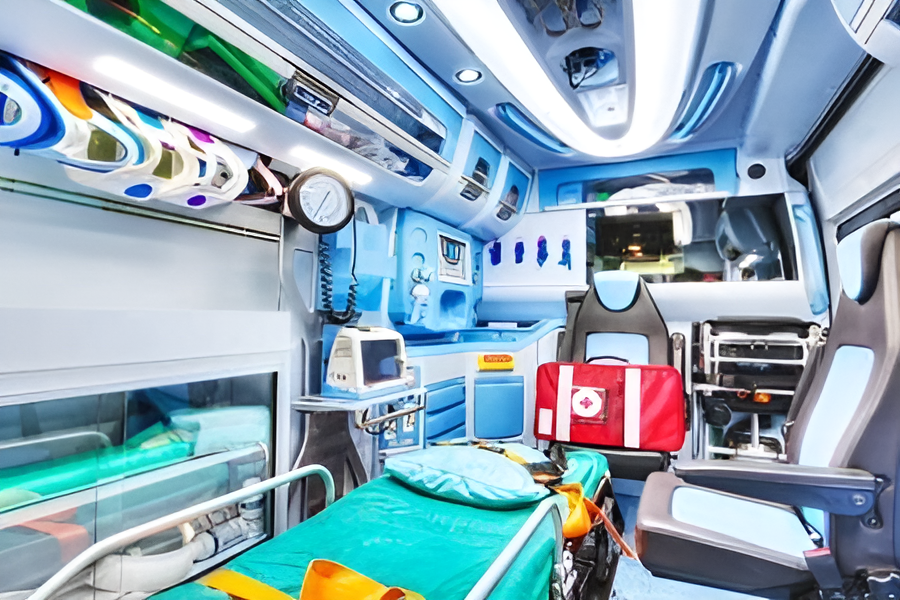
In the pre-hospital setting, AI is empowering paramedics and emergency responders with real-time decision-making support. AI-enabled systems in ambulances can now monitor vital signs, assess symptoms, and offer early diagnosis suggestions while en route to the hospital. With the integration of 5G, these mobile units transmit critical patient data to hospitals in real-time, allowing emergency departments to prepare even before the patient arrives. AI also plays a critical role in dispatch and logistics—optimizing routes, predicting ER congestion, and guiding patients to the most appropriate facility based on real-time capacity and specialty needs.
Once the patient reaches the emergency department, AI continues to support rapid and accurate clinical decisions. Algorithms trained on vast datasets are capable of analyzing imaging scans, lab values, and EHR data within seconds, often flagging high-risk conditions like stroke, sepsis, or internal bleeding faster than traditional workflows. Dynamic patient prioritization tools use AI to reassess patients continuously, ensuring the sickest are attended to promptly—even if their condition deteriorates after triage.
In critical care units, AI transitions from being reactive to predictive. Machine learning models can detect minute changes in heart rate, oxygenation, or lab results and predict life-threatening events like cardiac arrest or septic shock hours in advance. These early warning systems empower ICU teams to intervene before crises occur. AI is also improving precision in therapy delivery—such as automated medication titration, where infusion pumps adjust doses in real time based on a patient’s fluctuating vitals, reducing errors and improving safety.
Beyond the hospital walls, AI enables the expansion of critical care into underserved areas. Through tele-ICU platforms powered by intelligent data filtering, critical care experts can monitor patients in rural or remote hospitals, providing support only when intervention is needed—minimizing alert fatigue while extending expert care. Even after ICU discharge, AI-enabled tools continue to monitor patients at home, flagging risks for readmission or deterioration, and prompting timely intervention.
The real beauty of AI in critical care is not in replacing clinicians—but in amplifying their capacity. By handling data-heavy, repetitive tasks and offering real-time insights, AI frees up healthcare professionals to focus on human care: comforting a family, making judgment calls, and leading through uncertainty. It shifts the model from reactive response to proactive prevention, and from generalized protocols to personalized interventions.
As adoption grows and interoperability improves, AI’s role will only deepen. For patients, it means safer, faster, more precise care. For providers, it means working smarter—not harder—in environments where every action counts. In this new reality, AI is no longer the future of critical care. It’s the partner changing it forever.